ADVERTISEMENT
Could It Be Something Else?
Not every eyelid bump is milia. Other common eyelid bumps include:
- A Stye — usually painful, swollen, and red
- A Chalazion — larger and deeper under the skin
- Small clogged pores or whiteheads
- Cholesterol deposits called xanthelasma
- Skin irritation or allergic reactions
Should You Try to Remove Them Yourself?
It’s best not to squeeze, pick, or poke eyelid bumps at home — especially near the eye itself. Milia sit deeper under the skin than acne, and DIY removal can cause:
- Infection
- Scarring
- Skin damage
- Eye irritation
Dermatologists and eye specialists can remove persistent milia safely using sterile tools if needed.
What You Can Do While Waiting for an Appointment
Keep the area clean
Wash your face gently and remove all eye makeup before sleeping.
Avoid heavy products
Rich creams, petroleum-based ointments, and thick makeup around the eyes may worsen buildup for some people.
Don’t scrub aggressively
Use warm compresses
A warm (not hot) compress may help soften buildup and soothe the area.
Avoid picking
When to Seek Medical Care Sooner
Try to get evaluated sooner if you notice:
- Pain or tenderness
- Redness or swelling
- Discharge or crusting
- Blurred vision
- Rapidly enlarging bumps
- Bleeding
- Recurrent bumps in the same spot
The Bottom Line
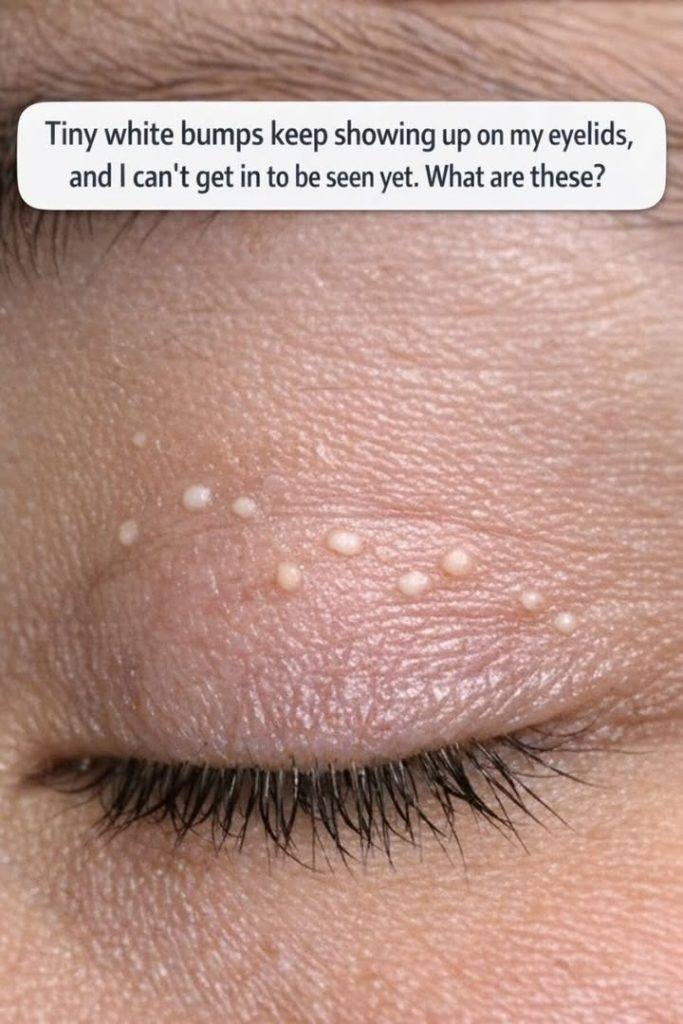
Tiny white bumps on the eyelids are most often milia — harmless little keratin cysts that commonly appear around the eyes. They’re annoying but usually not dangerous. Gentle skincare and avoiding picking can help until you’re able to see a dermatologist or eye doctor for confirmation and possible removal.
ADVERTISEMENT
