
ADVERTISEMENT
How to Check If Your Turmeric is Real or Fake at Home
With the increasing popularity of turmeric, it’s important to ensure that you’re using the real thing. Counterfeit or adulterated turmeric is becoming more common, so it’s essential to know if your turmeric is pure or if it’s been mixed with additives like starch, synthetic dyes, or fillers.
1. Water Test
How to Do It: Take a glass of warm water and add a teaspoon of turmeric powder. Stir lightly and let it sit undisturbed for about 10-15 minutes.
What to Look For: Pure turmeric will settle at the bottom of the glass, leaving clear water on top. If the water turns cloudy or there’s a colored residue floating on top, it may indicate the presence of artificial color or fillers.
2. Paper Test
How to Do It: Take a small pinch of turmeric powder and rub it on a plain white sheet of paper.
What to Look For: If the turmeric leaves a bright yellow stain that looks slightly oily, it’s likely pure. However, if it leaves a powdery residue or a stain that looks unnatural (too bright or reddish), it may contain artificial colors.
3. Alkali Test with Baking Soda
How to Do It: In a small bowl, mix a pinch of turmeric powder with a teaspoon of baking soda and a little water to form a paste.
4. Smell Test
Turmeric has a distinct earthy and slightly bitter aroma.
What to Look For: Pure turmeric has a strong, earthy, and slightly bitter aroma. If the smell is faint or off, it might be mixed with fillers or lower-quality turmeric.
5. Heat Test
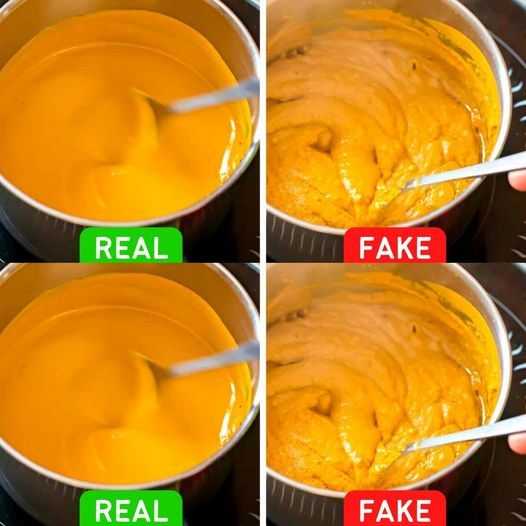
The heat test can help identify the purity of turmeric by releasing its aroma.
What to Look For: Pure turmeric will release a strong aroma when heated. If there’s little to no smell, it may be diluted or fake.
These tests are easy to perform at home and can help you identify pure turmeric. It’s worth the effort to ensure that you’re using real turmeric, as it has numerous health benefits and is a powerful spice with medicinal properties.
ADVERTISEMENT
