
ADVERTISEMENT
When It Helps Most
This trick tends to work best in specific scenarios:
- Directional needs: If you want stronger signal in one room or area
- Router placement near walls: Especially exterior walls where signal is wasted
- Simple home setups: Where interference and obstacles are minimal
Common Myths
There are several misconceptions about this hack:
- Myth: It boosts internet speed universally.
In reality, it only redistributes signal strength. Some areas may improve while others weaken. - Myth: More foil equals better performance.
Excessive or poorly placed foil can actually disrupt signal patterns and make things worse. - Myth: It replaces proper equipment upgrades.
Foil is not a substitute for a better router, mesh system, or range extender.
Potential Downsides
While generally harmless, using aluminum foil can have unintended effects:
- Signal imbalance: You may improve coverage in one direction but degrade it elsewhere
- Interference patterns: Irregular shapes can scatter signals unpredictably
- Aesthetic and practicality issues: It’s not exactly a clean or permanent solution
Better Alternatives
- Repositioning your router to a central, elevated location
- Adjusting antenna angles
- Using Wi-Fi extenders or mesh networks
- Upgrading to a newer router with better range and beamforming technology
These approaches provide more consistent and measurable improvements.
The Bottom Line
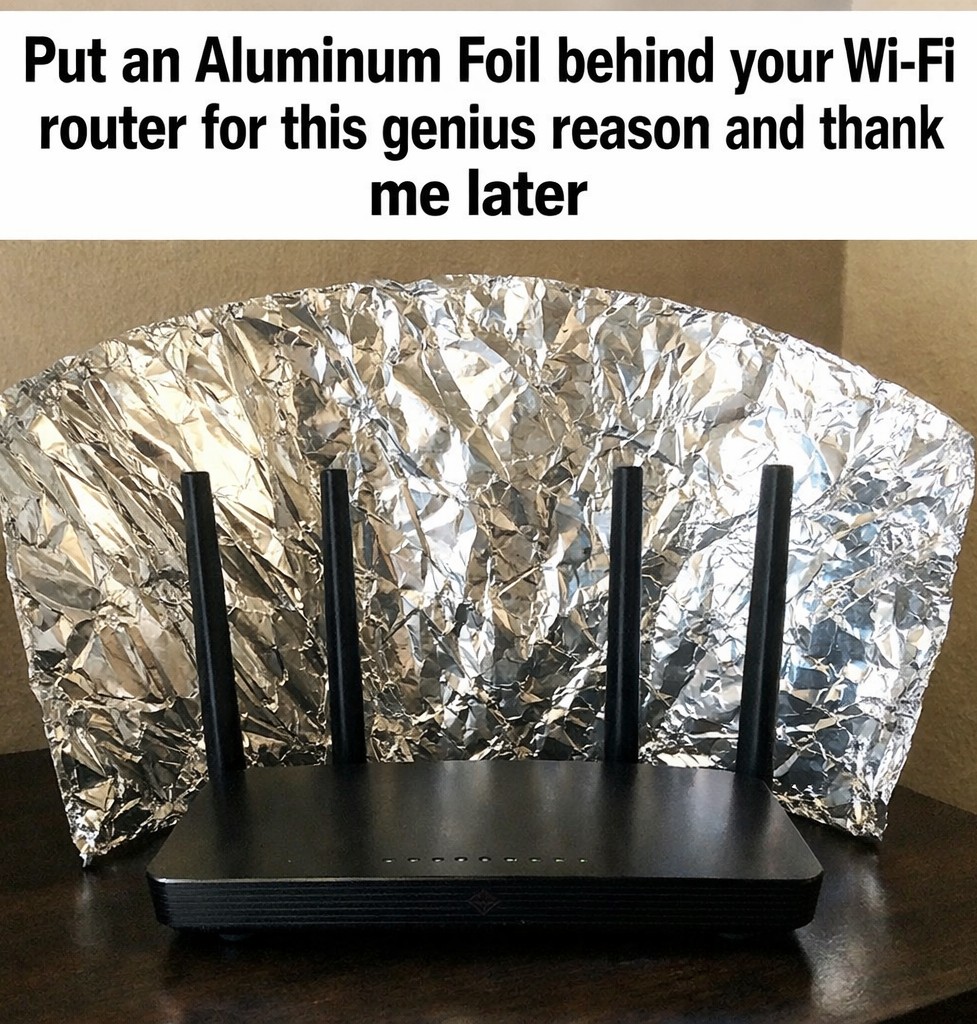
Putting aluminum foil behind your Wi-Fi router isn’t just a myth—it’s based on real electromagnetic principles. It can help direct your signal and slightly improve coverage in targeted areas. However, it’s not a magic fix and won’t solve deeper connectivity problems.
ADVERTISEMENT
