
ADVERTISEMENT
It’s About Safety First
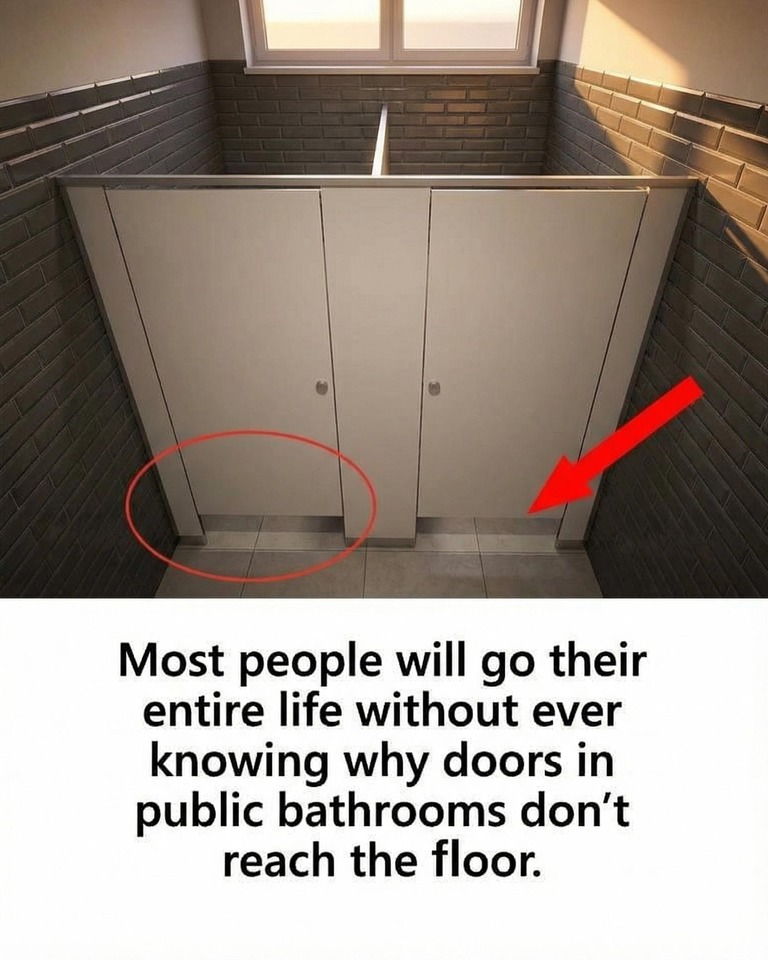
One of the biggest reasons is emergency access.
- Faints
- Has a medical emergency
- Becomes unresponsive
That gap allows others to quickly see there’s a problem and enables staff or emergency responders to reach the person without having to break the door down.
It’s not glamorous, but in public spaces, safety often outranks comfort.
Faster Cleaning, Better Hygiene
- Mop floors efficiently
- Hose down surfaces in some facilities
- Prevent moisture from being trapped
This helps reduce mold, standing water, and unpleasant odors—things no one wants lingering in a shared bathroom.
Cost (Yes, Really)
Extending doors all the way to the floor would significantly increase material, installation, and maintenance costs.
- Airports
- Schools
- Stadiums
- Office buildings
…and the price difference becomes massive. The standard design keeps restrooms affordable to build and easier to repair when doors inevitably get damaged.
Airflow Matters More Than You Think
Better airflow means:
- Odors dissipate faster
- Humidity doesn’t build up
- The restroom feels less claustrophobic
Discouraging Bad Behavior
Here’s the part no one likes to talk about—but designers do.
Limited privacy discourages:
- Vandalism
- Drug use
- Long-term loitering
Why Other Countries Do It Differently
If you’ve traveled abroad, you may have noticed restrooms with floor-to-ceiling stalls. These are more common in countries where:
- Restrooms are attended
- Facilities are smaller
- Cultural expectations of privacy differ
In the U.S., the emphasis has historically been on durability, accessibility, and speed of use in high-traffic spaces.
The Bottom Line
The gaps:
- Improve safety
- Make cleaning easier
- Reduce costs
- Increase airflow
- Help maintain order
ADVERTISEMENT
