
ADVERTISEMENT
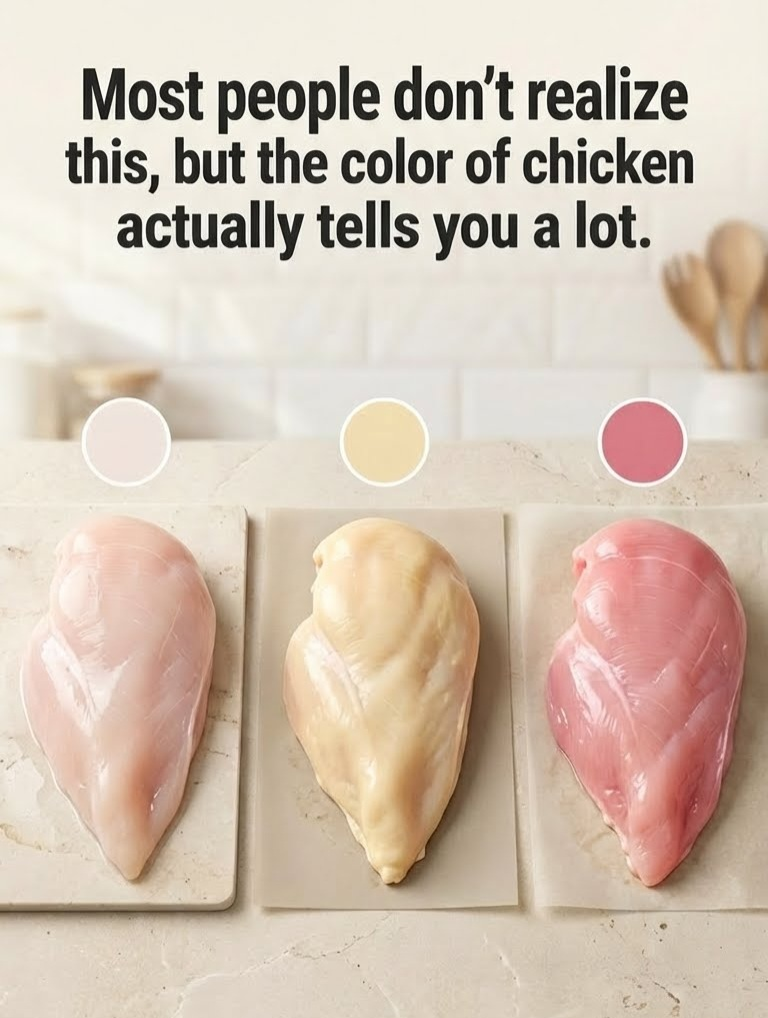
1. Pale Pink Chicken – The Standard Freshness Indicator
Fresh raw chicken is typically light pink with white fatty areas. This color indicates that the meat is fresh and has been properly stored. Some key points:
- Look for firm flesh that springs back when pressed.
- Avoid chicken with grayish or greenish patches.
- Slight variation in pinkness is normal depending on the chicken’s breed or diet.
2. Yellowish Chicken – Not Always a Problem
- Diet: Chickens fed on corn or marigold petals often have slightly yellow fat or skin.
- Breed: Some breeds naturally have yellowish skin.
Yellow coloring is not a sign of spoilage. However, always check for off smells or sliminess as indicators of bad chicken.
3. Darker Chicken or Red Spots – What to Know
Occasionally, raw chicken may have darker areas or small red spots. These are usually:
- Blood vessels or bruising – harmless and safe if the chicken smells fresh.
- Muscle pigment variations – common in older or free-range chickens.
4. Cooked Chicken Color Differences
Once cooked, chicken can vary from white to light brown or slightly pink near the bones. Factors influencing cooked color include:
- Cooking method (grilled, roasted, or boiled)
- Chicken age and diet
- Marinades or spices
Important: A slightly pink hue near bones is often normal if the meat reaches the safe internal temperature of 165°F (74°C). Always use a thermometer to confirm.
Tips for Choosing Quality Chicken
- Smell test: Fresh chicken should have little to no odor.
- Texture: Flesh should be firm and springy.
- Packaging: Check sell-by dates and avoid damaged or bloated packages.
- Source: Organic or free-range chickens often have slightly darker skin due to natural diets.
-
ADVERTISEMENT
