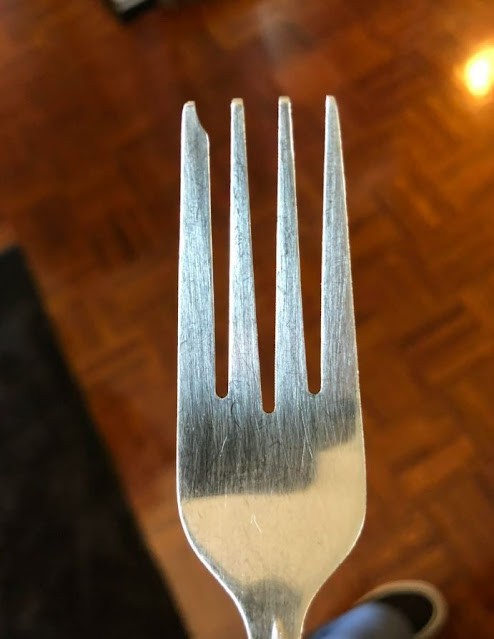
It’s Not Broken — It’s Engineered
Many modern forks, especially those included in flatware sets designed for versatility, feature a slightly beveled or notched outer tine. While it may look like wear and tear, it’s intentionally crafted to improve function.
The most common reason? Cutting power.
A fork isn’t just for spearing food. In many casual dining settings, it doubles as a knife. That slightly sharpened or notched edge allows you to cut softer foods like pancakes, fish, cooked vegetables, or even pasta without reaching for a separate blade. The minor indentation creates a more effective edge, increasing pressure at a single point — much like a serration would.