
ADVERTISEMENT
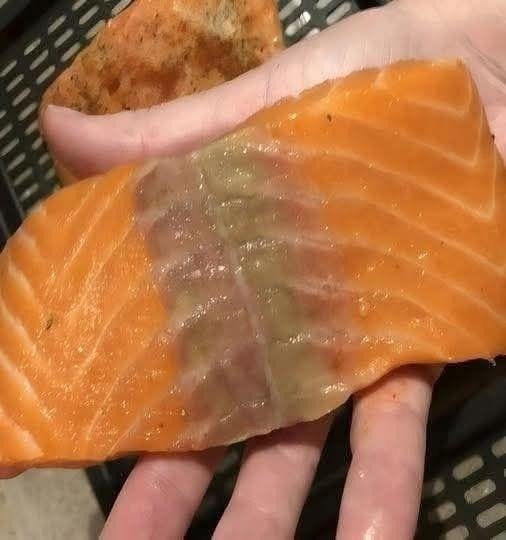
What the Yellow Stain Usually Is
In most cases, a yellow stain on salmon is caused by fat oxidation or protein breakdown. Salmon is a fatty fish, and over time — even in the refrigerator — its natural oils can begin to degrade when exposed to oxygen.
- Yellow or yellow-brown patches
- Slight changes in texture
- A dull or dry appearance
While this doesn’t automatically mean the fish is dangerous, it does signal aging.
Other Possible Causes
The yellow color may also come from:
- Natural fat deposits (especially in farm-raised salmon)
- Freezer or refrigerator dehydration if the fish wasn’t tightly wrapped
- Early spoilage, particularly if the salmon was stored close to its expiration date
How to Tell If the Salmon Is Still Safe
Smell:
Fresh salmon should smell mild and clean.
If it smells sour, fishy, or ammonia-like — discard it.
Texture:
The flesh should be firm and spring back when pressed.
Slimy or mushy texture is a red flag.
Is It Safe to Eat?
If the salmon:
- Has a strong odor
- Feels slimy
- Has been refrigerated for a week
Food poisoning from spoiled fish can be serious, and cooking does not make spoiled fish safe.
How to Store Salmon Properly Next Time
- Use fresh salmon within 24–48 hours
- Store it in the coldest part of the fridge
- Keep it tightly sealed or wrapped in plastic
- Freeze it immediately if you won’t use it within two days
-
ADVERTISEMENT
