
ADVERTISEMENT
- Mattresses
- Pillows
- Cushions
- Stuffed toys
to include labels disclosing their filling materials. The goal was to ensure honesty and safety in the marketplace.
So… Are Pillow Tags Illegal to Remove?
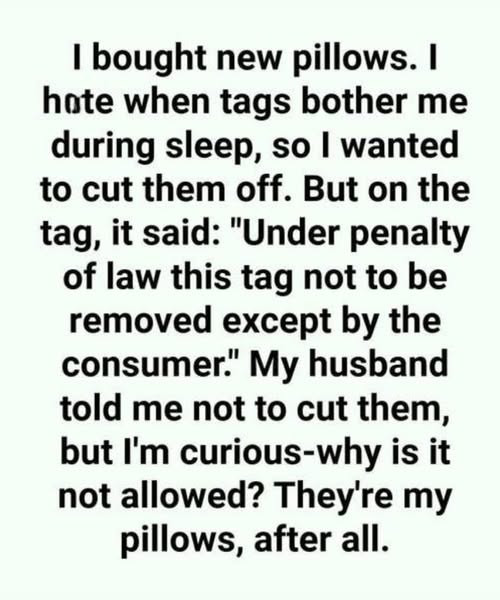
Good news: in most places, you are not breaking the law by removing the tag on a pillow you already own.
Here’s how it works:
- It is illegal for manufacturers or sellers to remove these tags before you buy the item.
That’s because the label has to be there so you can make an informed choice. - But once the pillow is in your hands — and especially once you’ve bought it — most laws do not make it illegal for you to remove the tag.
You can trim the tag off if it’s bothering you, rubbing your neck, or creating lint in your bed.
Exceptions to Know
While pillow tags themselves aren’t something you’ll get in trouble for removing at home, there are some exceptions worth noting:
✅ Do not remove tags that are meant for safety warnings.
Some products include tags that explain fire safety, choking hazards, choking warnings, or recall information. Those should stay attached or at least kept with the product.
📌 Rules can vary by region.
Most of these labeling requirements come from consumer protection laws and can differ slightly depending on your country or state.
Why Companies Still Add the “Illegal to Remove” Line
- It fulfills legal labeling requirements.
- It protects them from legal issues if tags are removed in a store before purchase.
- It’s part of an old regulation that has stuck around.
So that extra line is more about business compliance than your legal liability.
ADVERTISEMENT
