
ADVERTISEMENT
1. Static Electricity on the Screen
Even when the TV is off, residual static can remain, continuing to attract dust to the surface.
2. Heat and Air Circulation
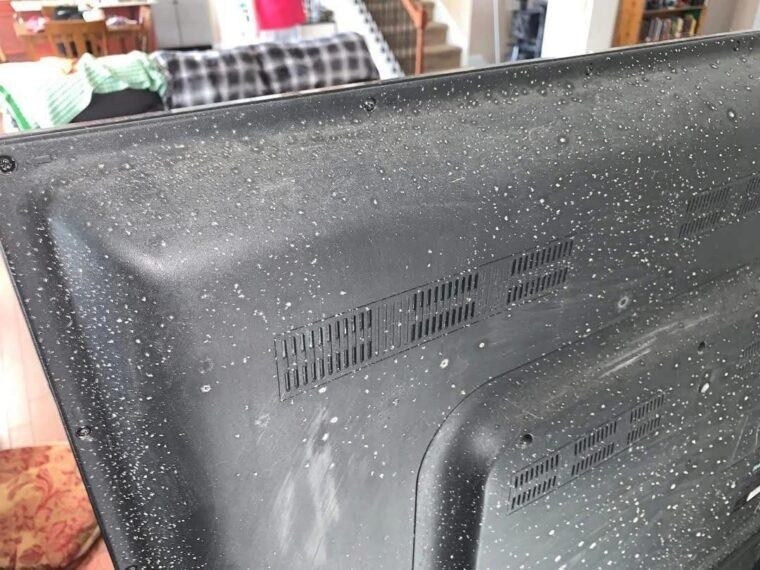
TVs generate heat while operating, and warm air rises. As air moves around the TV, it creates small circulation patterns that pull in dust from the surrounding area.
- Dust collecting on the top and back of the TV
- Dust buildup on shelves or the floor nearby
The TV isn’t creating dust—it’s drawing it in as air flows around it.
3. Electronics Act as Dust Magnets
Electronic devices naturally attract dust more than furniture or walls. Tiny electrical fields around TVs, game consoles, and streaming devices can pull in particles, especially in rooms with low humidity.
4. Low Humidity Makes Dust Worse
Dry indoor air allows dust to float more freely and increases static buildup. In homes with low humidity—especially during winter—dust settles more easily on screens and electronics.
5. Nearby Fabrics and Flooring Contribute
Carpets, curtains, and upholstered furniture release fibers and particles into the air. When your TV is nearby, it becomes a convenient landing spot for this dust.
ADVERTISEMENT
