
ADVERTISEMENT
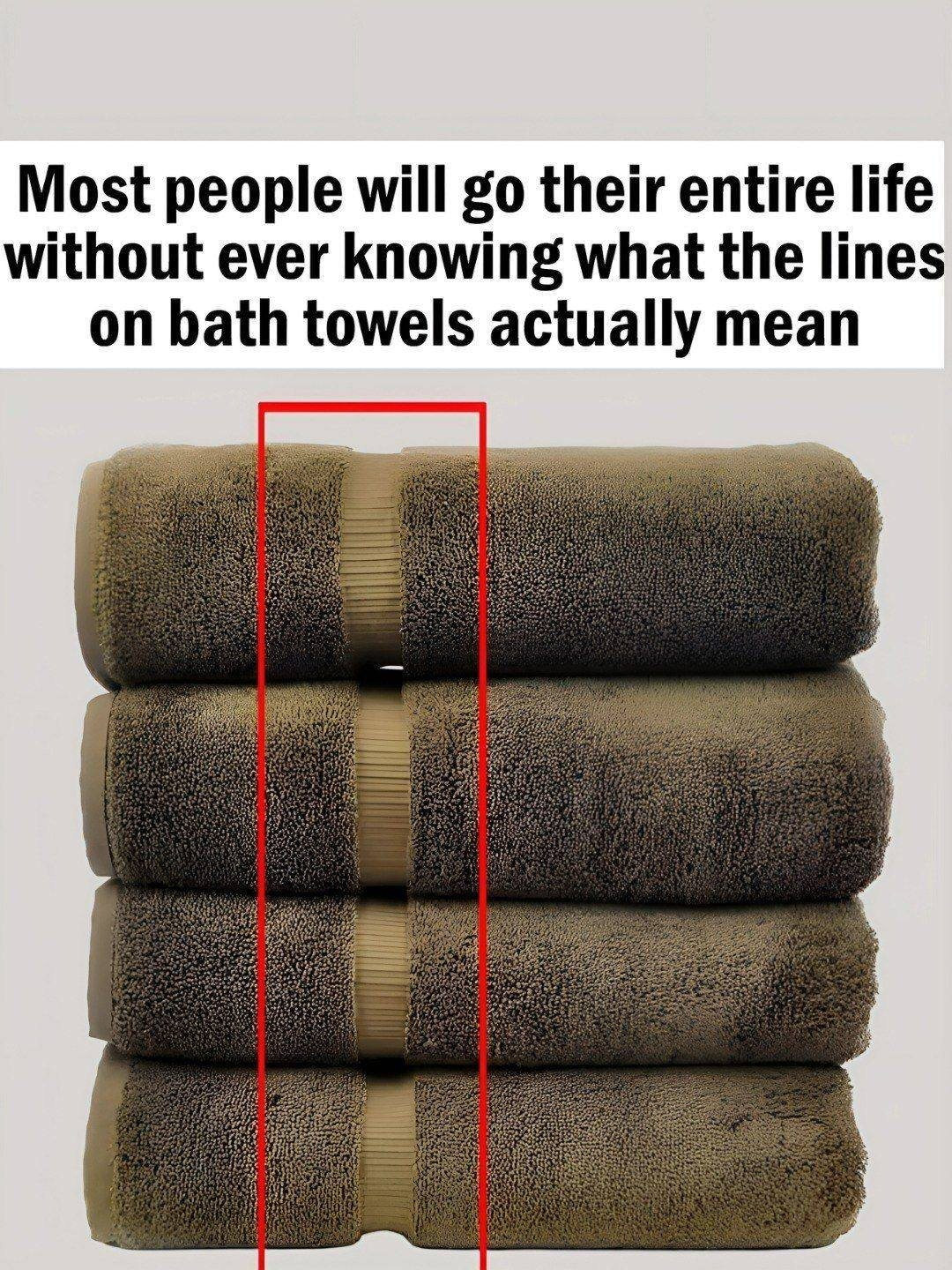
The Lines Have a Name
While they do look nice, their function goes far beyond decoration.
1. They Prevent Fraying
One of the main jobs of the dobby border is to reinforce the ends of the towel. Towels are constantly pulled, washed, and dried, which puts stress on the edges. The tighter weave helps prevent fraying, unraveling, and curling over time.
2. They Help the Towel Keep Its Shape
3. They Improve Absorbency Where It Counts
The fluffy looped part of the towel is designed for absorbency, while the dobby border absorbs less water. This balance helps the towel dry faster and prevents the edges from becoming overly heavy or soggy.
4. They Make Towels Easier to Fold and Hang
Those lines also act as a natural folding guide, making towels easier to fold neatly and hang evenly on towel racks. Hotels and spas rely on this feature to keep towels looking crisp and uniform.
ADVERTISEMENT
