
ADVERTISEMENT
Why Urine Color Matters
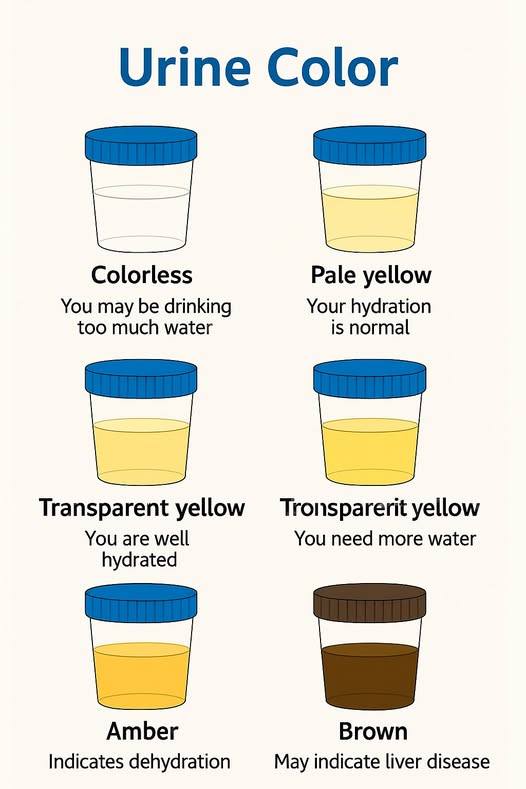
Urine Color Guide
1. Clear or Very Pale Yellow
What it may mean:
- You’re very well hydrated—or possibly overhydrated.
- Drinking a lot of water or diuretic beverages (like coffee or herbal tea) can lead to this color.
When to take note:
Occasional clear urine is fine, but consistently clear urine could mean you’re drinking more water than your body needs.
2. Light Yellow (Straw-Colored)
3. Yellow to Dark Yellow
What it may mean:
- Mild dehydration
- Concentrated urine from exercise, heat, or not drinking enough fluids
Tip:
Increase your water intake, especially if you’ve been sweating or active.
4. Amber or Honey-Colored
- Moderate dehydration
Your body is conserving water, making your urine more concentrated.
What to do:
Drink water consistently throughout the day to restore balance.
5. Orange
- Dehydration
- Certain foods (carrots, beets)
- Supplements (vitamin C, beta-carotene)
- Some medications
When to be cautious:
If the color is not from foods or supplements and persists, consider checking with a healthcare provider—especially if it’s accompanied by fatigue or pale stools.
6. Pink or Red
- Foods (beets, blackberries, rhubarb)
- Certain medications
- Presence of blood (hematuria)
When to take action:
If red or pink urine appears without a dietary explanation, or continues for more than a day, it’s wise to consult a medical professional. Blood in the urine can have a variety of causes, some minor and some requiring care.
7. Brown or Cola-Colored
Possible causes:
- Severe dehydration
- Some medications or foods
- In rare cases, muscle breakdown or liver-related conditions
8. Blue or Green
Possible causes:
- Food dyes
- Certain medications
- Rare metabolic conditions
- Occasionally caused by certain bacteria
When to take action:
If you haven’t consumed anything that would explain unusual colors, and it continues, consult a healthcare provider.
ADVERTISEMENT
