
ADVERTISEMENT
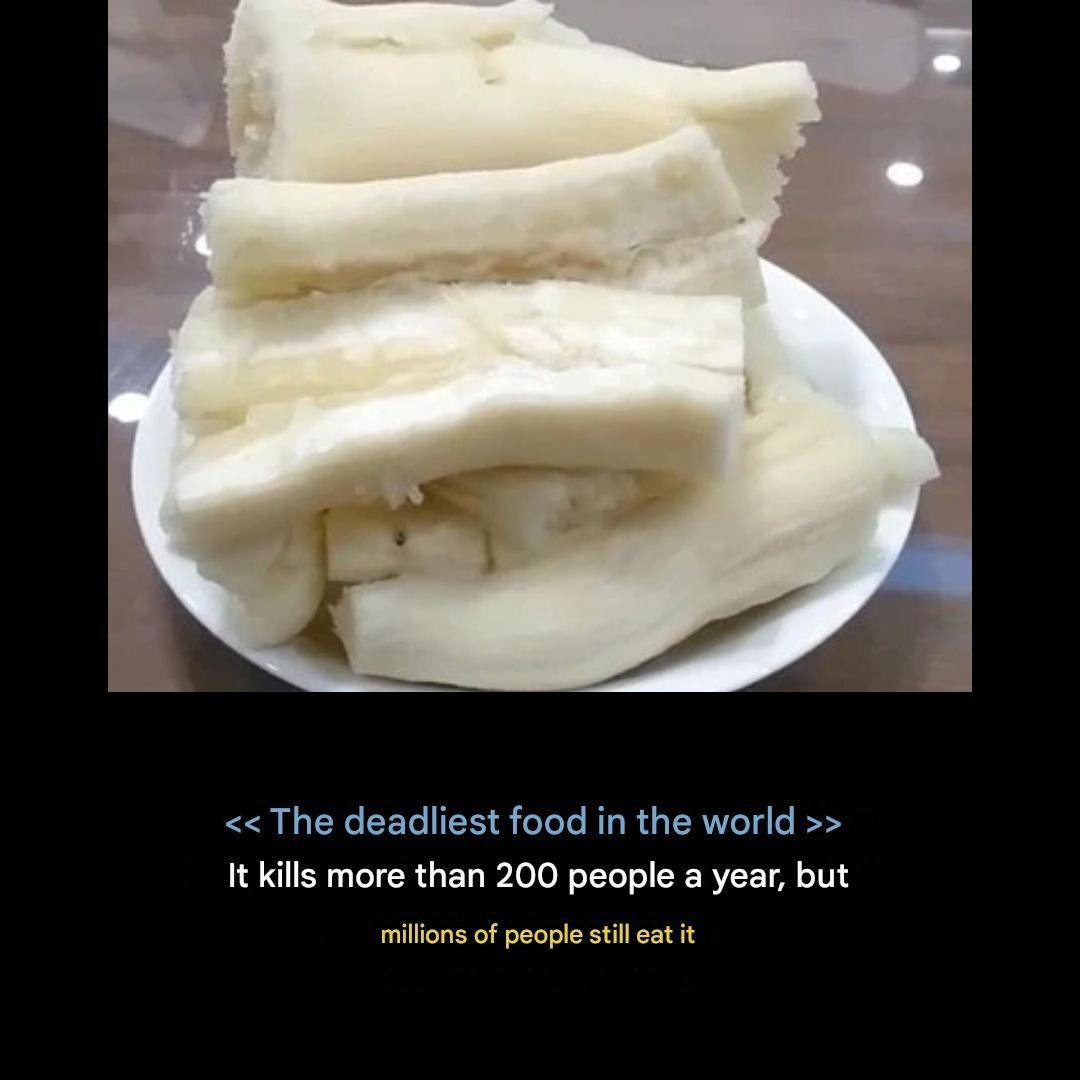
⚠️ Why Is Cassava Dangerous?
- Cassava contains compounds called cyanogenic glucosides, which can release hydrogen cyanide when the plant material (especially the bitter varieties) is eaten raw or processed inadequately. (Live Science)
- In times of food shortage or famine, when proper preparation is skipped, the risk of poisoning goes up. (ThatViralFeed)
- Poisoning symptoms range from headaches and dizziness to paralysis, seizures, and even death. Long‑term consumption of poorly processed cassava is also linked to a neurological disease called konzo, which causes irreversible paralysis of the legs. (Tiny House Zone)
💡 How People Make It Safe
- Peeling the root thoroughly (since the highest toxin concentration is in the skin and peel).
- Soaking the peeled root in water, sometimes for extended periods.
- Boiling or drying in the sun before consumption. (Live Science)
When these steps are followed, the risk is greatly reduced. But if skipped — such as during crises when people eat quickly or resources are limited — the hazard increases.
✅ What This Means For You
If you or your community rely on cassava or similar root crops, it’s important to:
- Ensure proper processing — peel, soak, boil or dry thoroughly.
- Be aware that “sweet” vs “bitter” cassava varieties differ — bitter types contain higher toxin levels.
- Understand this isn’t just about food scarcity — even in well‑supplied settings, skipping prep increases risk.
- Advocate for education and food safety in regions where cassava is a staple.
🌟 Final Thoughts
Recognition of this “double‑edged” nature of staple foods is crucial — especially in global food security contexts where nutrition and safety must go hand in hand. The story of cassava emphasizes that even the most common foods can hide significant risks if mishandled.
ADVERTISEMENT
