
ADVERTISEMENT
## 🔬 What the Authorities Found
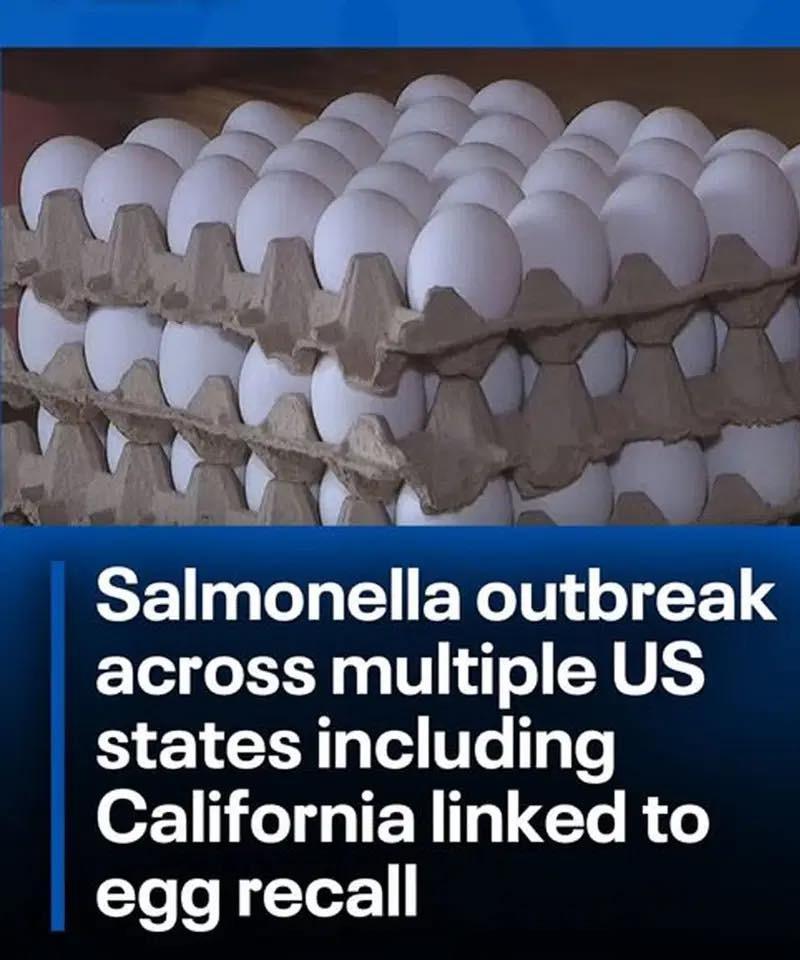
Health and regulatory agencies — including Centers for Disease Control and Prevention (CDC) and U.S. Food and Drug Administration (FDA) — conducted epidemiologic, laboratory, and traceback investigations, which determined:
On November 20, 2025, CDC declared the outbreak over. ([CDC][3])
—
* Symptoms of Salmonella infection typically appear **6 hours to 6 days** after eating contaminated food. ([CDC][3])
* Symptoms include **diarrhea, fever, stomach cramps**, and sometimes **vomiting**. ([CDC][3])
* While many recover within about a week, certain groups are at higher risk for severe illness: **young children, older adults, and people with weakened immune systems**. ([CDC][3])
* In this outbreak: dozens were sickened; many required hospitalization; but fortunately **no deaths** were reported. ([CDC][8])
## ✅ What You Should Do to Stay Safe
* **Check eggs before using**: If you live where imports might include recalled batches — or if you can’t trace the source — be cautious.
* **Cook eggs thoroughly** — don’t eat raw or undercooked eggs. Use a food thermometer if possible; eggs should reach about **160 °F (71 °C)**, or yolks and whites should be fully firm. ([Scientific American][9])
* **Practice good kitchen hygiene**: Wash hands, utensils, surfaces before and after handling raw eggs; avoid cross-contamination with other foods, especially ready-to-eat items. ([CDC][3])
* **Refrigerate eggs properly and use promptly**, especially in warm climates — or discard eggs if in doubt. ([CDC][3])
* Stay informed: follow food safety alerts from public-health authorities.
ADVERTISEMENT
