
ADVERTISEMENT
🌿 First, Know Your USDA Zone
Not sure of your zone? You can look it up on the USDA website or by entering your zip code into any gardening app or website.
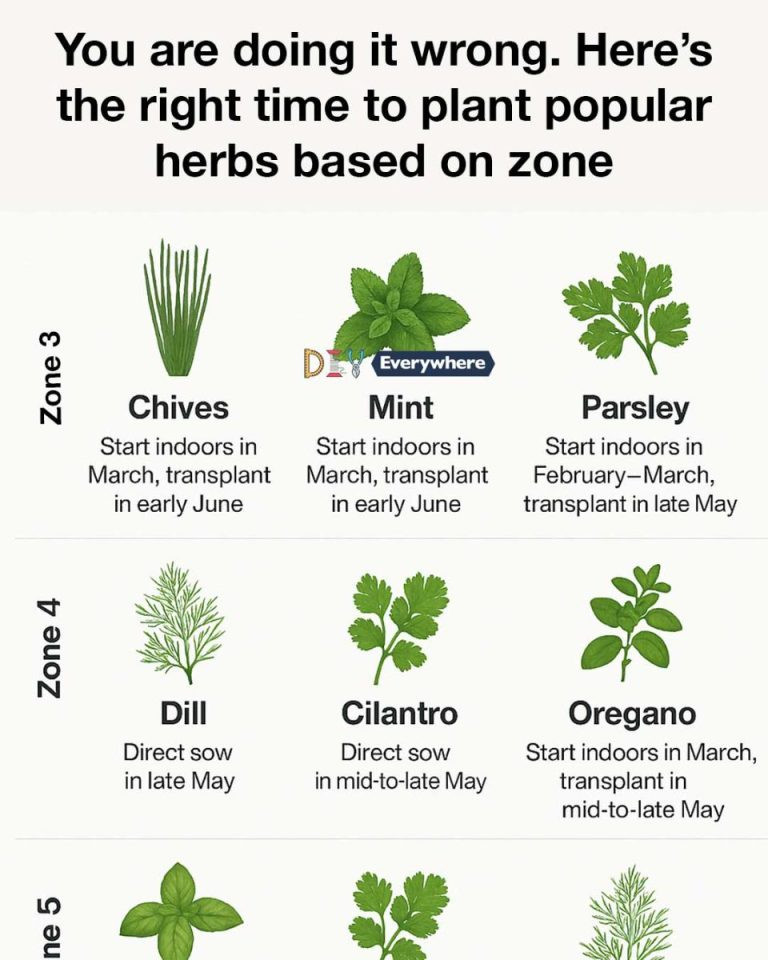
🌱 When to Plant the Most Popular Herbs by Zone
1. Basil
- Zones 3–5: Start seeds indoors 6–8 weeks before last frost. Transplant outside in late spring (after all danger of frost).
- Zones 6–7: Direct sow or transplant outdoors in mid to late spring.
- Zones 8–10: Plant outdoors in early spring; basil thrives in warm temps.
- Zone 11+: Basil can be grown year-round, but avoid hottest summer months in tropical climates.
🌞 Tip: Basil loves heat and hates cold. Even a light frost can kill it.
2. Cilantro
- Zones 3–7: Sow seeds directly in early spring or fall. It bolts quickly in summer heat.
- Zones 8–10: Best grown in fall, winter, or early spring.
- Zone 11+: Cool season herb — avoid planting in peak summer.
3. Parsley
- Zones 3–5: Start indoors 8–10 weeks before the last frost; transplant when the soil warms.
- Zones 6–7: Direct sow or transplant in early to mid-spring.
- Zones 8–10: Can be planted in late fall or early spring.
- Zone 11+: Best as a winter crop or grown in partial shade year-round.
🐝 Bonus: Let parsley flower and it’ll attract pollinators!
4. Thyme
- Zones 3–5: Start indoors and transplant after frost danger passes.
- Zones 6–10: Direct sow or transplant in spring or early fall.
- Zone 11+: Plant in fall or early winter, avoiding intense summer heat.
🌿 Thyme is perennial in most zones — plant once and enjoy for years!
5. Mint
- Zones 3–10: Plant in spring after frost, or in fall in warmer zones.
- Zone 11+: Grow in cooler seasons or as a potted plant indoors/outdoors.
🛠️ Final Tips for Herb Success
- Check frost dates: Your “last frost” and “first frost” dates are key for timing.
- Soil matters: Most herbs need well-drained soil and at least 6 hours of sun.
- Don’t over-fertilize: Herbs grown for flavor do best with minimal feeding.
- Harvest often: Regular harvesting encourages more growth — and keeps herbs from flowering too soon.
-
ADVERTISEMENT
