
ADVERTISEMENT
Franco Albini: The Rational Designer with an Avant-Garde Edge
Franco Albini was not your average designer. A key figure in Italian Rationalism, Albini believed in combining minimalist aesthetics with functionality. His work always served a purpose — but never without elegance.
Born in 1905, Albini trained as an architect and went on to shape Italian modernism through furniture, urban design, and museum spaces. Unlike many of his contemporaries who leaned into flamboyance, Albini’s approach was disciplined — clean lines, honest materials, and structural clarity.
Meet the Cicognino (“Little Stork”)
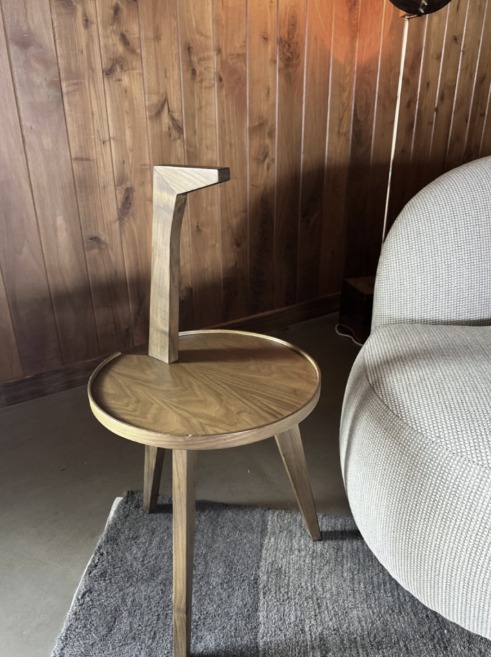
Designed in 1952, the Cicognino Side Table (also known as the “Cicognino Table” or “Little Stork”) is named for its unusual silhouette. Its tall, beak-like handle — rising from a small round tabletop — gives it the unmistakable profile of a stork. The name “Cicognino” literally means “little stork” in Italian.
What makes it special?
- Three legs instead of four: A bold move that makes it inherently more sculptural and light.
- Integrated handle: A whimsical yet practical feature — pick it up and move it wherever it’s needed.
- Minimalist, yet playful: It’s refined, but never takes itself too seriously.
At only about 18 inches tall, it’s the perfect sidekick: next to a lounge chair, beside a bed, or tucked into a quiet reading corner.
Why It “Shouldn’t” Work – And Why It Does
- It’s off-balance by design.
- It looks like a bird on one leg.
- The handle appears too thin, almost fragile.
- The proportions feel asymmetrical.
But then, you see it in person.
The tripod base gives it surprising stability. The handle, while elegant, is strong enough to lift and move with ease. The surface area — just enough for a book, a cup, or a drink — encourages light, intentional use.
In short: it shouldn’t work.
ADVERTISEMENT
